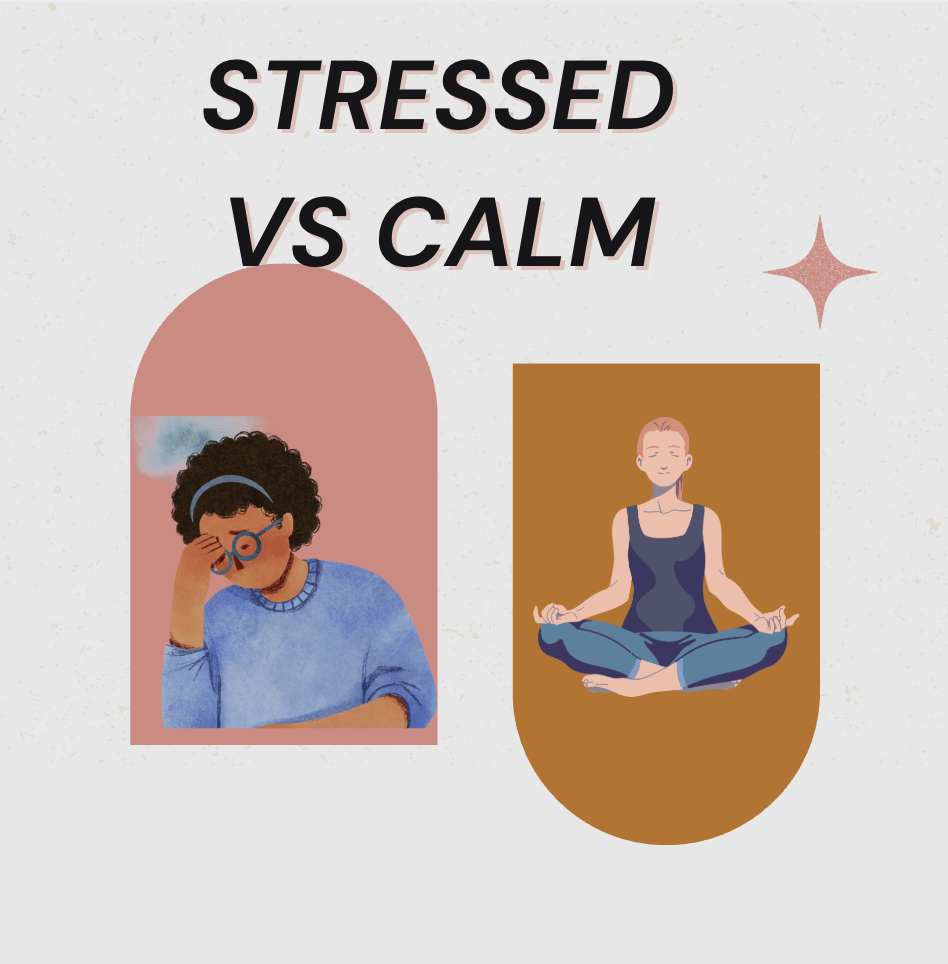
In high school, not every student’s day looks the same. Some fill their schedules and advanced classes and extracurriculars, while others choose a lighter load to ease into the year. These decisions can have a big impact on students’ stress levels, motivation, and mental health.
Two students, Rita Murithi and Suan Kim, show just how different those experiences can be. These two students are on very different sides of the spectrum. Most freshmen take about 7 classes which leaves them with 5-7 free periods in their 8 day schedule. Rita takes 6 classes which gives her 8 free and 2 study halls and Suan has 1 study hall and 1 free period.
Rita’s Schedule
For Rita Murithi, a freshman, high school was a fresh start. She wanted it to be manageable. With fewer classes, she could adjust to a new environment without feeling overwhelmed. She said, “I wanted to have an easy, soft freshman year.”
With a lighter schedule, she feels in control of her time and workload. “Yes, I do feel like I have downtime,” she says, “I can get my work done on time without trouble.”
The slower pace has given Rita space to focus on her studies while maintaining more well-being. But she admits that she would like to have more challenging math. She says “I would double up on math and do geometry,” adding that she didn’t realize she could until school started.
This rule of doubling up the math has helped many students. It adds another math class in one year but gets the student ahead. This assists and boosts the students for the next year.
Suan’s Schedule
On the other hand, Suan Kim thrives on a busy schedule. She takes six majors and one minor, including double math and Treble Chorus. “I wanted to do something that challenged me because I already knew what geometry was,” Suan said. Her heavy workload keeps her constantly engaged, but it also adds “more pressure and I feel stressed about Algebra 2.”
Homework
Rita spends about 1-2 hour doing homework a day with her most manageable class being English and her hardest being Physics. The average homework time in High school is 3 hours per night according to the National Centre of Education Statistics and Suan spends 3.5 hours doing homework a day.
Statistics and stress levels
But what do others say? A high school English teacher named Tim Donahue wrote in the New York Times about demanding schedules. He wrote, “We have pushed high school students into maximizing every part of their days and nights.” He also adds that when High School students have a lot on their plate they do a “so-so job” on their work.
Hannah Cooke, Neag School doctoral candidate in the Department of Curriculum and Instruction wrote, “Students and teachers can focus on four classes at a time, and students may do better on final exams because of the reduced course load.” When more people have more classes, it could become hard and stressful for students to keep up.
Despite the stress, Suan stays on top of her work. She says, “Yes, definitely, I can get my work done.” Still sometimes she wishes she had more freedom in her schedule. She said, “I had to drop art because I had no time,” and that she would drop the treble chorus because it takes up valuable time that she could spend on her work and other hobbies.
Their stories reveal that success in school isn’t just about how many classes you take. It’s about finding the balance between challenge and rest. Whether it’s a lighter schedule like Rita’s or demanding like Suan’s, both matter just as much.